
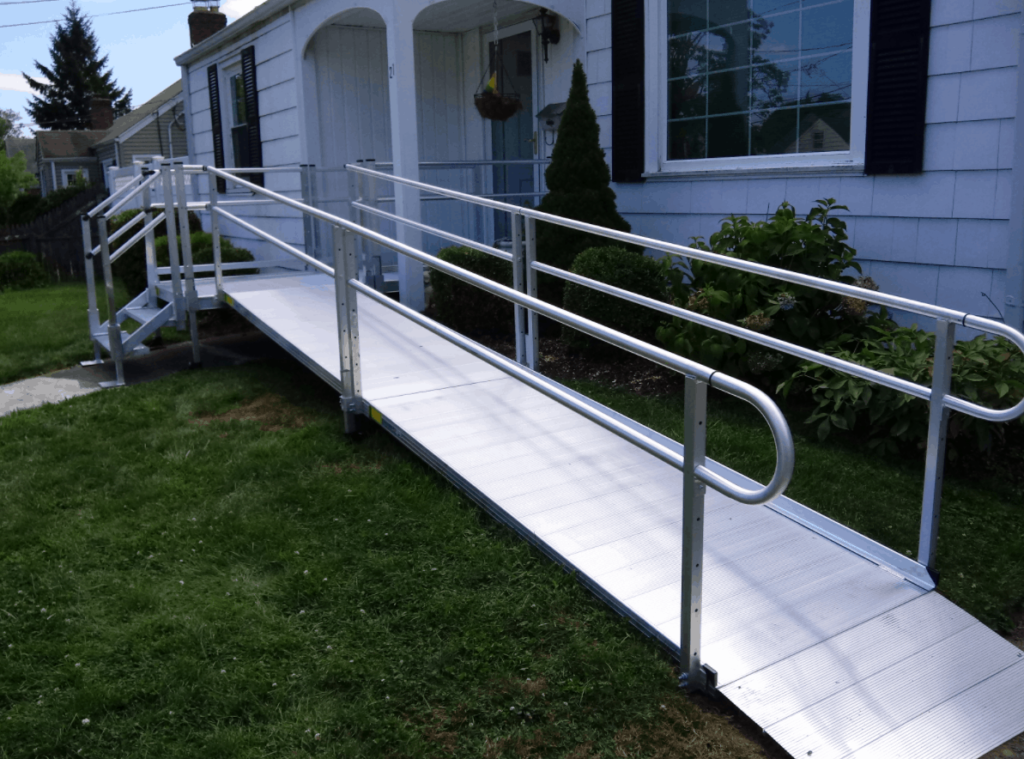
In the pursuit of creating inclusive and accessible environments, ramps play a crucial role in ensuring that every individual, regardless of physical ability, can navigate their surroundings with ease and safety. Particularly at home, where comfort and security are paramount, ramps offer not only accessibility but also the opportunity for individuals to age in place gracefully. Let’s explore how ramps provide safety and accessibility while enabling aging in place, along with the various types available to suit different needs.
Safety and Accessibility:
The installation of ramps at home significantly enhances safety and accessibility for everyone, including individuals with mobility challenges, seniors, parents with strollers, and even those carrying heavy loads. Here’s how:
- Mobility Assistance: For individuals using wheelchairs, walkers, or other mobility aids, ramps eliminate barriers posed by stairs, allowing seamless movement in and out of the house. This independence fosters confidence and dignity, empowering individuals to navigate their homes comfortably.
- Prevention of Accidents: Stairs can be hazardous, especially for older adults and those with mobility issues, increasing the risk of falls and injuries. Ramps provide a gradual incline, reducing the likelihood of accidents and promoting a safer living environment.
- Universal Design: Ramps embody the principles of universal design, which advocate for environments accessible to people of all ages and abilities. By incorporating ramps into home architecture, homeowners embrace inclusivity and ensure that their spaces are welcoming to everyone.
Aging in Place:
Aging in place refers to the ability of individuals to live comfortably and independently in their own homes as they grow older. Ramps contribute significantly to this concept by enabling seniors to remain in familiar surroundings while maintaining their autonomy. Here’s how ramps facilitate aging in place:
- Preservation of Independence: As mobility declines with age, navigating stairs can become increasingly challenging. Ramps offer a practical solution, allowing seniors to continue living independently without relying on assistance for mobility within their homes.
- Promotion of Well-Being: Remaining in familiar surroundings promotes emotional well-being and a sense of belonging, factors vital for seniors’ mental health. Ramps facilitate this by removing physical barriers and enabling seniors to access all areas of their homes comfortably.
- Cost-Effective Solution: Compared to costly home renovations or relocating to assisted living facilities, installing ramps is a cost-effective way to adapt homes for aging residents. This investment not only enhances accessibility but also adds value to the property.
Different Types of Ramps:
Ramps come in various designs and materials to suit different needs and preferences. Some common types include:
- Threshold Ramps: Ideal for overcoming small height differentials, such as door thresholds or single steps, these ramps provide a smooth transition between surfaces.
- Portable Ramps: Lightweight and versatile, portable ramps can be easily moved and adjusted as needed, making them suitable for temporary use or for accessing multiple entry points.
- Modular Ramps: Constructed from interlocking sections, modular ramps offer flexibility in design and can be customized to fit various spaces and configurations.
- Permanent Ramps: Designed for long-term use, permanent ramps are typically built from durable materials such as concrete, wood, or aluminum, providing a sturdy and reliable accessibility solution.
In conclusion, ramps at home serve as more than just functional additions—they embody inclusivity, safety, and independence. By embracing the principles of accessibility and incorporating ramps into home design, individuals can create environments that accommodate diverse needs and enable aging in place with dignity and autonomy. Let’s continue to build homes that prioritize accessibility, ensuring that everyone has the opportunity to thrive in their own spaces.